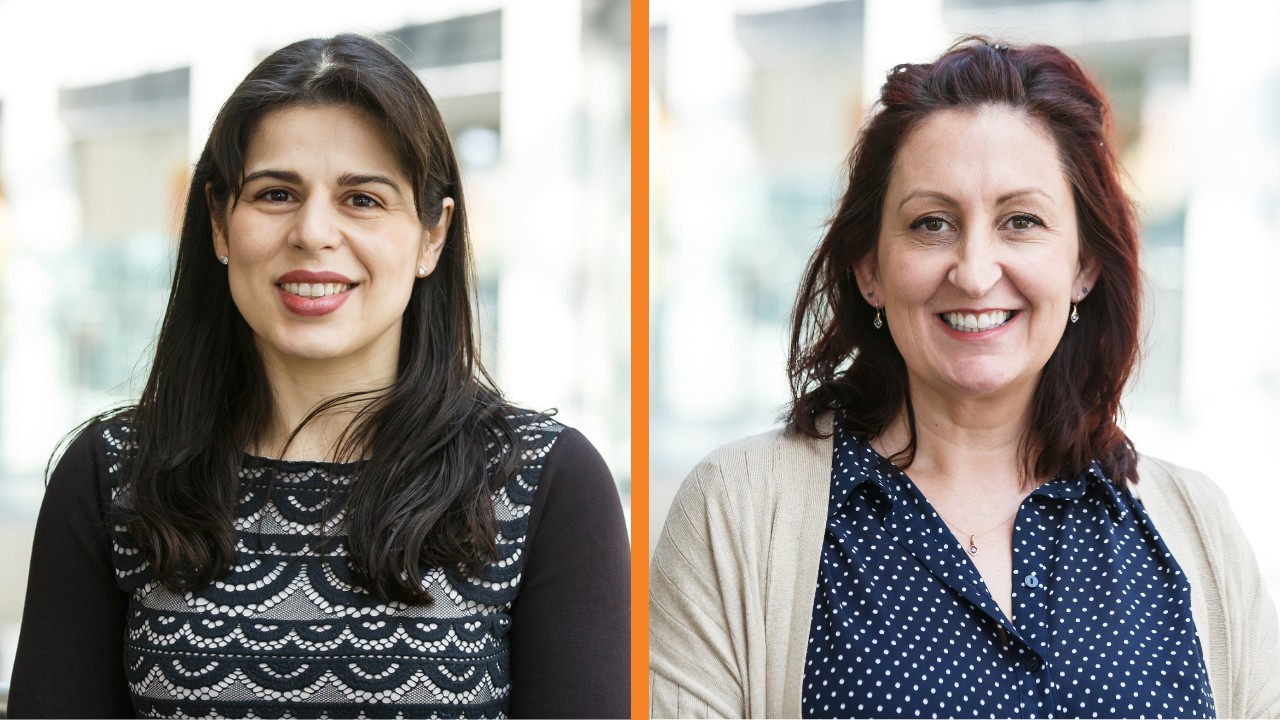
The International Day of Women and Girls in Science, celebrated on 11th February, is dedicated to recognising the vital contributions of women and girls in the fields of science, technology, engineering, and mathematics (STEM). To mark the occasion, we hear from Dr Claire Parkin, Associate Professor of Medical Education, Lead for Scholarship and Scientific Enquiry and Lead for Student Choice, and Dr Pamela Leventis, Senior Lecturer and Academic Lead for Year Three, as they share insights into how their journey into science began, what inspired them to pursue a career in the field, and what they enjoy most about her work.
Dr Claire Parkin, who has a has a clinical background in Critical Care and a specialist interest in Medical Education, as well as PhD in Biomedical Engineering, was asked to share her thoughts on what the International Day of Women and Girls in Science means to her:
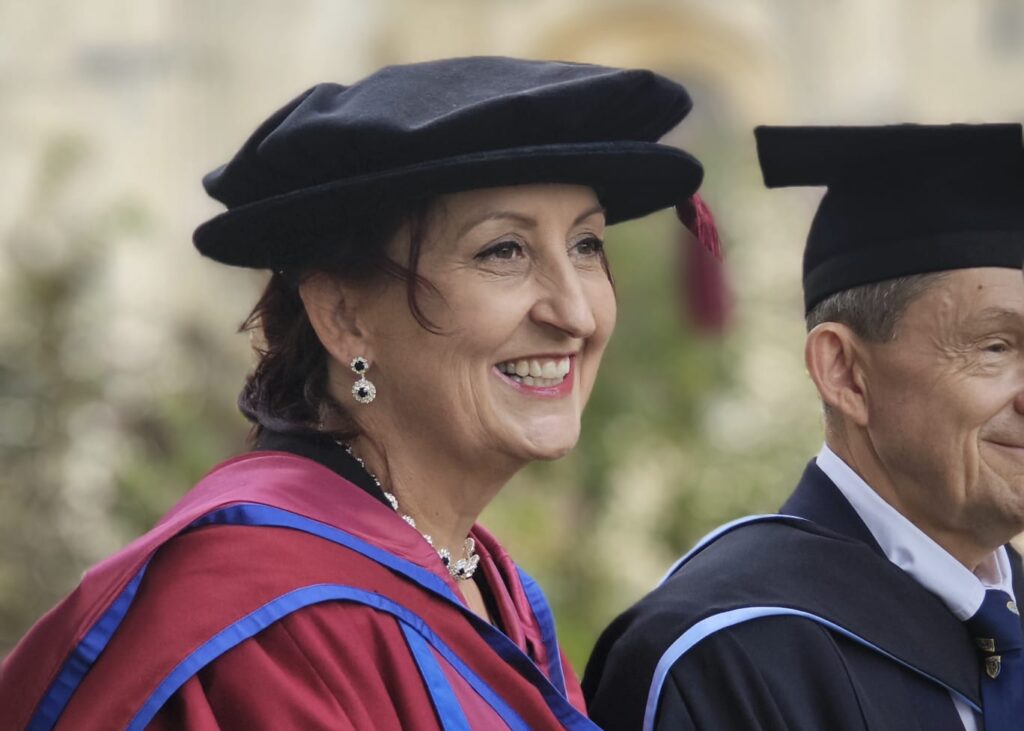
“Women in science have continually pushed boundaries, challenged assumptions, and expanded our understanding of the world. Learning about their discoveries and perseverance showed me that curiosity and determination matter more than stereotypes or obstacles. Their stories inspired me to believe in my own potential and to see science as a place where I could belong.
“At school, science was not something I was encouraged to pursue. Because of my limb loss, decisions were quietly made on my behalf about what I could and could not do. Practical work was deemed “unsafe,” experiments “impractical,” and expectations quietly lowered. The message was clear: science was not for someone like me.
That exclusion had the opposite effect of what was intended. Being told no — repeatedly and confidently — became the driving force behind everything I did next.
“The same pattern of rejection repeats itself when you live life with disability. Twenty times, medical schools decided — without ever meeting me — what they believed I could not do. Each rejection reinforced a familiar message, but it also strengthened a familiar resolve. Being shut out did not stop me; it sharpened me.
“Over time, science stopped being just an interest and became a defiance. I trained, practiced, and proved — not out of spite, but out of a refusal to let other people’s assumptions define my limits. In clinical settings, I have performed internal cardiac massage with one hand, acting decisively when seconds mattered. In the laboratory, I worked on NF-κB transcription factor pathways, contributing to research into the inflammatory mechanisms of septic shock. Precision, patience, and persistence mattered far more than how many limbs I had.
“That same determination carried me into a bioengineering PhD. My doctoral work involved designing and building a human thorax model using swine lungs, replicating physiologic intrathoracic pressures to explore the mechanisms of lung injury. By recreating the physics of fluid flow, the model allowed investigation into the treatment of haemothoraces and pneumothoraces — questions that sit at the intersection of medicine, engineering, and survival.
“Somewhere along that path, science stopped being something I was fighting to access and became my life. The very barriers that once excluded me became the reason I pushed further, worked harder, and refused to be average. My passion for medical education grew during that time and ultimately became central to everything I now do. Medical education is my life, and I love it. Sharing knowledge, empowering future clinicians, and widening access to learning feels like the most direct way to challenge the same barriers that once tried to close doors for me.
“I was prevented from doing science at school. It is precisely because of that exclusion that I never stopped doing it afterward.”

Dr Pamela Leventis, a Fellow of the Academy of Medical Educators, shared her perspective on her journey into medicine:
“As a consultant rheumatologist and senior lecturer at KMMS, I am reminded daily that medicine is not only about treating disease, but about shaping futures.
“Working in metabolic bone health, I support people with conditions such as osteoporosis to live well and remain independent. I spend much of my time talking about building bone and muscle strength, and often find myself considering strength in a wider sense.
Being a woman in medicine means standing on the shoulders of those strong, determined women who opened doors before us, and holding them open for those who follow: our students, our patients, and my own daughters.
“I hope they see that leadership can be compassionate, that expertise and kindness belong together and that curiosity has no expiry date.
“As more women have joined the profession, medicine itself has evolved. Different experiences and perspectives have widened how we listen, how we lead, and how we care for patients; changes shaped by many people but made possible because the profession became more inclusive.
“Medicine now offers many ways to build a fulfilling career: clinical practice, research, education, leadership, and paths that change over time as life does. Healthcare itself is evolving just as quickly, with new treatments, new technologies and new ways of caring for patients.
“My hope for the next generation is that they feel able to shape a career that fits their lives and their values, and that they approach the future of medicine with confidence, curiosity and optimism.”
Learn more about International Day of Women and Girls in Science on 11th February.